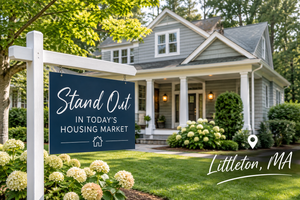
What Makes Littleton, MA So Attractive to Long-Term Homeowners
What makes Littleton, MA such an appealing place for homeowners who plan to stay for the long haul?
Littleton combines small-town character, an overwhelmingly owner-occupied housing stock, and strong home values with a location that keeps you connected to Greater Boston's employment corridors, making it one of the more compelling choices for buyers who want to put down roots.
Why This Matters Right Now in Littleton
If you are evaluating communities in Middlesex County for a home you plan to own for a decade or more, the question is not just "Can I afford to buy here?" It is "Will this town still feel like the right decision in 2036?"
That is exactly the lens we use when working with buyers in Littleton. With 28 years in real estate and over 550 closed transactions, we have watched towns in this part of Massachusetts evolve, and Littleton's trajectory has been remarkably steady. The data supports what we see on the ground: residents move in and they stay. According to 2020 to 2024 American Community Survey five-year estimates per Census QuickFacts, 95.3% of Littleton residents age one and older lived in the same house one year prior.

Littleton's Owner-Occupancy Culture Sets It Apart
You may not think of owner-occupancy rates as a lifestyle indicator, but they are. When a town's housing stock is overwhelmingly owner-occupied, the streets look different.
In Littleton, the owner-occupied housing unit rate sits at 83.6%, according to 2020 to 2024 ACS five-year estimates per Census QuickFacts. Compare that to the Massachusetts statewide rate of 62.5% over the same period. That gap of more than 20 percentage points is substantial. It means that when you buy in Littleton, the vast majority of your neighbors are homeowners, too, not absentee landlords or short-term occupants cycling through.
What does that mean in practice? It means the family next door is likely attending the same community events, supporting the same local schools, and caring about the same neighborhood issues you care about. With 3,975 total housing units and 3,804 occupied households (2020 to 2024 ACS five-year estimates, per Census data), the vacancy rate in Littleton is extremely low. Homes here are lived in, not held as speculative investments. For you as a luxury buyer considering a long-term commitment, that distinction matters.
Littleton Home Values and Financial Stability
One of the first questions we hear from buyers evaluating Littleton is whether home values here hold up over time. The structural indicators say yes.
A Median That Outpaces the State
The median value of owner-occupied housing units in Littleton is $658,300, according to 2020 to 2024 ACS five-year estimates per Census QuickFacts. That is roughly 17% above the Massachusetts statewide median of $562,100 over the same period. The premium reflects the sustained demand for homes in this community.
An Affluent, Educated Resident Base
Financial resilience in a community matters when you are thinking in terms of decades. Littleton's median household income of $149,722 (2020 to 2024 ACS five-year estimates, per Census QuickFacts) reflects a financially stable resident base. Meanwhile, 59.6% of residents hold a bachelor's degree or higher, according to 2024 ACS five-year data per Census data. This combination of income and education describes a financially stable, professionally accomplished resident base — the kind of community profile that long-term buyers actively seek.
In our experience, buyers who are comparing Littleton to neighboring towns like Westford, Acton, or Concord often find that Littleton offers a compelling combination of value, community character, and long-term financial fundamentals. We help clients think through those comparisons carefully because the right choice depends on your priorities, your commute, and where you see yourself in ten or twenty years.
Small-Town Scale with Big-Town Access in Littleton
One of the most common things we hear from buyers who choose Littleton is that they wanted a genuine small-town feel without sacrificing access to the employment corridors and amenities of Greater Boston. With a July 2025 population estimate of 10,404 spread across 16.52 square miles (per Census QuickFacts), Littleton delivers exactly that.
Location Between Major Corridors
Littleton sits at a strategic point between Route 2 and I-495, giving you access to both the Route 128 technology corridor and the communities along 495 without living on top of highway noise and congestion. The Littleton/Route 495 commuter rail stop provides a direct connection into Boston for those who work in the city but prefer to come home to a quieter environment.
Measured Growth, Not Explosive Change
You want a town that is growing, because stagnation brings its own problems. But you do not want growth so rapid that it overwhelms schools, strains infrastructure, and transforms the community you bought into. Littleton's population increased 2.7% from April 2020 to July 2025, per Census QuickFacts. That is measured, sustainable growth, exactly the kind that preserves what attracted you in the first place.
We have seen firsthand how location, property condition, updates, outdoor space, and proximity to everyday conveniences all influence a home's appeal and value here. When we guide buyers through the market, we talk through those factors because they are what make a Littleton home feel like more than just a transaction. It is a lifestyle decision.
Littleton's Community Character and Residential Neighborhoods
Data can tell you a lot, but it cannot fully capture the feeling of driving through Littleton's residential neighborhoods on a Saturday morning: well-kept homes, kids riding bikes, neighbors chatting at the end of a driveway. That character is not accidental. It is the product of an owner-occupancy culture, a financially stable population, and a community that invests in itself.
What Draws Buyers and Keeps Them
Over the years, we have had the privilege of helping buyers and sellers throughout Littleton and the surrounding communities. We know that buying or selling a home is about more than square footage and listing prices. In Littleton, it is about understanding that small-town charm, the beautiful residential neighborhoods, and the genuine sense of community are the assets you are really buying when you choose to live here.
For luxury buyers, the peer group matters. Living among neighbors who are professionally accomplished, financially stable, and committed to their community creates an environment that supports both your quality of life and the long-term value of your home. The numbers confirm this: a 59.6% bachelor's degree attainment rate and a median household income of $149,722 (both 2020 to 2024 ACS five-year estimates, per Census data) describe a community of people who have chosen Littleton deliberately and stayed by choice.
Outdoor Space and Property Character
Littleton's relatively low density, a population of roughly 10,404 across 16.52 square miles, means the town retains a lower-density character relative to its proximity to Greater Boston. If outdoor space is important to you, whether that means gardens, recreation, or simply room to breathe, Littleton's housing stock tends to deliver.
How Littleton Compares for Downsizing or Right-Sizing in the Region
If you are currently in a larger home in Westford, Acton, or another nearby community and considering downsizing in Westford MA or the surrounding area, Littleton deserves a careful look. Some buyers assume that downsizing means leaving the region, but Littleton's mix of housing options, combined with its community character, can accommodate different life stages.
Whether you are purchasing your first home, moving into your next chapter, or preparing to sell, our experience throughout the Littleton area helps us guide clients through each step. Rated 5 out of 5 stars by past clients across 200 reviews, we approach every property with a thoughtful strategy that kind of guidance matters especially when you are making a long-term decision. Downsizing in Westford MA or right-sizing into Littleton is not just about finding a smaller floor plan. It is about making sure the community, the location, and the financial picture all align with your goals for the next decade and beyond.

Frequently Asked Questions About Living in Littleton, MA Long-Term
Is Littleton, MA a good place to live long-term?
The data suggests strong long-term appeal. Per 2020 to 2024 ACS five-year estimates from Census QuickFacts, 95.3% of residents age one and older lived in the same house one year prior. That residential stability, combined with an 83.6% owner-occupancy rate, shows that the overwhelming majority of residents remain in place year over year. The community's character, location, and financial fundamentals support that pattern.
What is the median home value in Littleton, MA?
The median value of owner-occupied housing units in Littleton is $658,300, per 2020 to 2024 ACS five-year estimates from Census QuickFacts. This is roughly 17% above the Massachusetts statewide median of $562,100 over the same period. Keep in mind that ACS five-year data reflects averaged conditions across 2020 to 2024, so current market pricing may differ.
How does Littleton's owner-occupancy rate compare to the rest of Massachusetts?
Littleton's owner-occupied housing unit rate of 83.6% is more than 20 percentage points above the Massachusetts statewide rate of 62.5%, both from 2020 to 2024 ACS five-year estimates per Census QuickFacts. This means the vast majority of homes in Littleton are occupied by their owners, not renters or investors.
What is the median household income in Littleton, MA?
The median household income is $149,722 in 2024 dollars, per 2020 to 2024 ACS five-year estimates from Census QuickFacts. This reflects a financially stable resident base.
Is Littleton, MA growing too fast?
Population growth from April 2020 to July 2025 was 2.7%, per Census QuickFacts. That pace is measured and unlikely to strain infrastructure or erode the town's small-town character. In our experience, buyers appreciate that Littleton is evolving without losing what makes it special.
How big is Littleton, MA?
Littleton covers 16.52 square miles with a July 2025 population estimate of 10,404, per Census QuickFacts. That relatively low density preserves generous lot sizes and a lower-density character that buyers often find difficult to locate this close to Greater Boston.
What are monthly ownership costs like in Littleton?
The median selected monthly owner costs with a mortgage were $3,096, per 2020 to 2024 ACS five-year estimates from Census QuickFacts. Your actual costs will depend on your loan terms, property taxes, and insurance. We always recommend getting a detailed estimate specific to your financial situation before making an offer.
How does Littleton compare to Westford for long-term homeowners?
Both towns attract committed, long-term residents and offer excellent locations along the I-495 corridor. The choice often comes down to specific neighborhood character, lot sizes, commute patterns, and what stage of life you are in. If you are considering downsizing in Westford MA or exploring Littleton, we can help you compare the specifics side by side.
What education level do Littleton residents typically have?
According to 2024 ACS five-year data per Census data, 59.6% of Littleton residents hold a bachelor's degree or higher. This educated resident base contributes to the community's civic engagement, school quality expectations, and overall neighborhood stability.
How do I know if Littleton, MA is right for my long-term plans?
Start by clarifying your priorities: commute, outdoor space, community character, school access, and financial goals. Then look at the data, like the ones we have outlined in this post. And talk to someone who knows the town. With 28 years in real estate and recognized as a Top 4% producer among agents worldwide, we bring both the data expertise and the local knowledge to help you make a confident decision.
The Bottom Line on Long-Term Homeownership in Littleton, MA
Littleton checks the boxes that matter most when you are buying a home you plan to keep for years. The residential stability is exceptional. The owner-occupancy culture creates neighborhoods that are well-maintained and cohesive. Home values reflect sustained demand, and the resident base is financially and educationally strong. Growth is measured, not disruptive. And the location keeps you connected to Greater Boston without sacrificing small-town life.
For us, real estate has always been about more than transactions. It is about building relationships, sharing local knowledge, and helping people feel confident about one of their biggest decisions. If you are considering Littleton, MA, or thinking about how to downsize your home Westford or make your next move in the region, we are here to help. Reach out to Tricia Eggert and Leah Paglia at the Reliable Results Team, 978-496-8695, and let us put our experience to work for you.