Old Home or New Construction? How Littleton Buyers Are Choosing
Should you buy an established home or new construction in Littleton, MA?
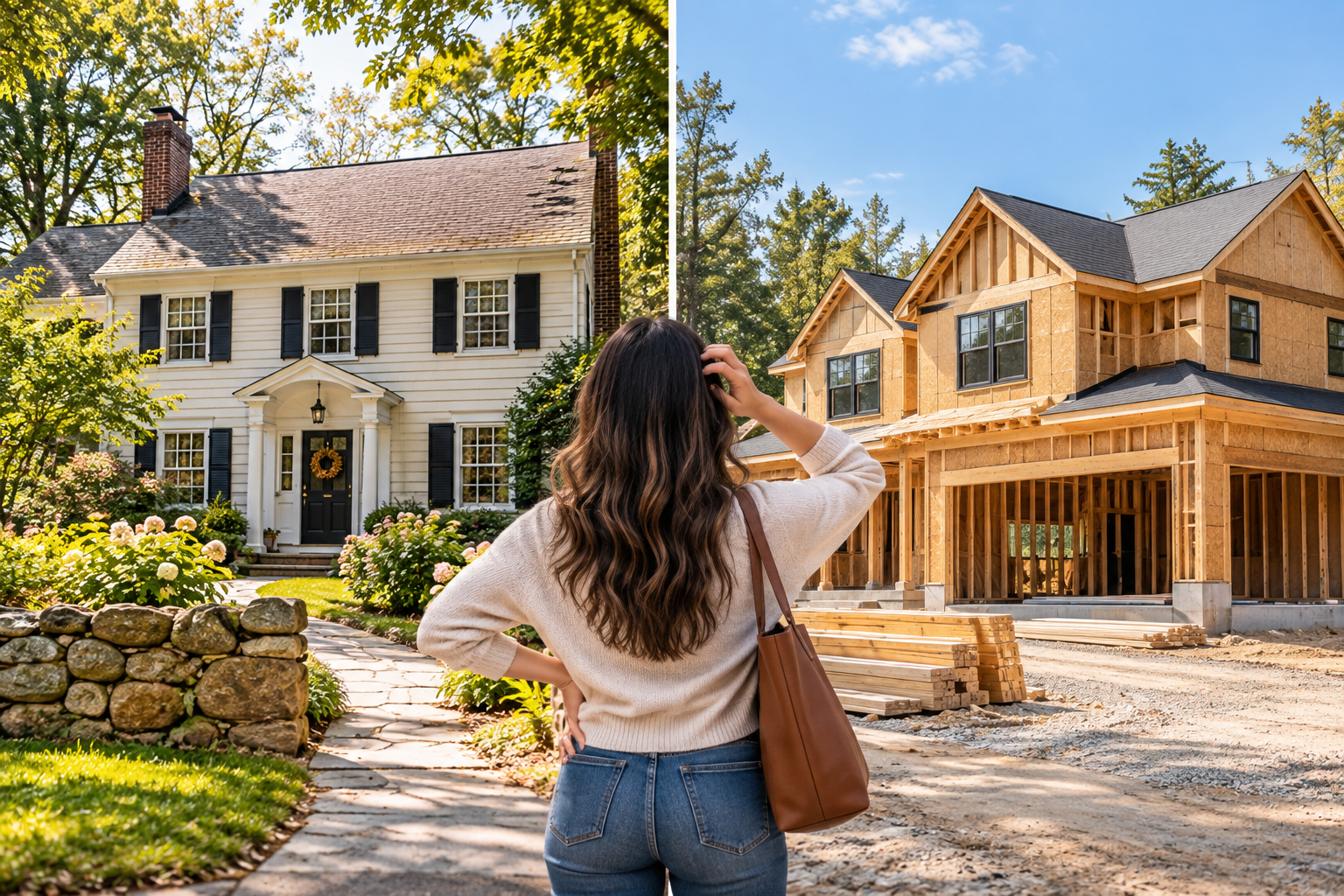
Most Littleton buyers are choosing established homes for location, lot size, and neighborhood character, but new construction appeals to those prioritizing modern systems and move-in-ready finishes. Your best choice depends on your lifestyle priorities and which Littleton neighborhood fits you best.
Why This Decision Matters for Littleton Buyers Right Now
If you are actively searching for a home in Littleton, you are walking into one of the tightest markets in the MetroWest region. With only 13 to 16 active listings at any given time and median sale prices ranging from the high $700Ks to low $800Ks, every purchasing decision carries real weight. A March 2026 median near $1.2M shows just how quickly the top of this market can move.
What makes this decision particularly consequential in Littleton is the town's limited inventory of true new construction. Unlike sprawling suburban communities with dozens of active developments, Littleton's charm comes from its established residential fabric, its mature tree-lined streets, and neighborhoods that have had decades to develop character.
That means the "old home vs. new build" question here is not just about personal preference. It is about supply, location trade-offs, and long-term value in a market where homes sell in 36 to 47 days and the most desirable properties go pending even faster.
So how do you decide? Let us walk through exactly what we are seeing on the ground.
What Established Littleton Homes Offer That New Construction Cannot
When we talk about "established homes" in Littleton, we are really talking about the homes that define this town's identity. Walk through Littleton Common, the heart of the community near the intersection of King Street and Great Road, and you will immediately understand why buyers fall in love with the older housing stock here.
Historic brick buildings, mature landscaping, generous lot sizes, and a walkable village center that includes spots like LittleTown Coffee Co., Great Road Kitchen, and Dirigible Brewing Company all create a lifestyle that simply cannot be replicated in a new development.
Here is what established Littleton homes tend to offer:
Location premium. The most desirable pockets of Littleton, like Littleton Common and South Littleton along the Ayer Road corridor, are fully built out. You cannot build new in these areas because the land is spoken for.
Lot size and privacy. South Littleton in particular offers single-family homes in the $650,000 to $800,000 range with more elbow room and larger lots than you will find in most new construction communities.
Proven neighborhood stability. A strong 81% of residents in Littleton Common own their homes, creating a rooted, invested community that buyers feel from the first visit.
Proximity to schools and transit. Littleton High School, ranked number 47 in Massachusetts by U.S. News and World Report, sits right on King Street. The MBTA Commuter Rail station provides direct service to Boston's North Station in about one hour.
Over the three months ending May 2026, Littleton Common home prices were up 6.2% compared to the same period last year, selling for a median price of $810K. That kind of appreciation in an established neighborhood tells you something important: buyers are actively choosing location and character, and the market is rewarding those choices.
Where New Construction Fits into the Littleton Market
New construction in Littleton is not nonexistent, but it looks different here than in communities with large-scale planned developments. You are more likely to find custom or semi-custom builds on individual lots, teardown-and-rebuild projects, or smaller infill developments rather than massive subdivisions with model homes and sales centers.
What new construction typically delivers for Littleton buyers:
Modern systems and energy efficiency. Newer homes come with current building codes, high-efficiency HVAC, better insulation, and often smart-home features that older homes simply were not built with.
Move-in-ready finishes. You skip the renovation phase entirely. No negotiating over outdated kitchens or aging roofing.
Builder warranties. Most new builds include structural and systems warranties that provide peace of mind for the first several years.
Open floor plans. Contemporary layouts tend to prioritize flow between living spaces in ways that older colonial and cape-style homes were not designed for.
The trade-off? You are almost always giving up something on location. The most walkable, transit-accessible, and school-proximate neighborhoods in Littleton are already built. A new construction home may sit on a beautiful lot, but it is unlikely to be steps from Bumblebee Park or a short walk to the shops along King Street.
With 28 years of experience and over 550 closed transactions across Littleton, Westford, and the surrounding communities, we have seen this pattern play out consistently. Buyers who prioritize modern finishes and low maintenance lean toward new builds. Buyers who prioritize community, walkability, and neighborhood character lean toward established homes. Neither choice is wrong; it comes down to what you value most in your daily life.
How Littleton's Neighborhoods Shape Your Decision
One of the things we always tell our clients is that understanding Littleton at the neighborhood level is essential. Different areas attract different types of buyers, and factors like lot size, property condition, proximity to amenities, and school access all influence how a home performs in the market. Here is how the three primary pockets of Littleton break down for this decision:
Littleton Common and Town Center
This is where old-home buyers thrive. The competitiveness score of 84 out of 100 tells the story. Many homes here receive multiple offers, some with waived contingencies, and the average home sells for about 1% above list price. Hot homes can sell for about 6% above list price and go pending in around 13 days. If you want to live in the walkable heart of Littleton, near the historic town offices on Shattuck Street and the charming storefronts along King Street, you are shopping the existing inventory.
South Littleton
Centered around the Ayer Road corridor with residential streets branching off toward Foster Street and Goldsmith Street, South Littleton is noted for its family-friendly atmosphere. Single-family homes here typically range from $650,000 to $800,000, offering more space and privacy. This is where you may occasionally find a new build or a tear-down opportunity on a larger lot, giving you a hybrid option.
Nashoba and Great Road Corridor
This corridor offers a mix of housing styles and price points. For buyers open to updating an older property over time, this area can represent strong value relative to the town center premium.
The Financial Calculus: Renovation Costs vs. Builder Premiums in Littleton
Here is where the decision gets practical. When you are looking at an established home priced at $810K in Littleton Common versus a new or newly built home at a comparable price point, you need to think about total cost of ownership over the first five to ten years.
With an established home, you should budget for potential updates. Dated homes can be smart buys if you are willing to update over time, and in a market like Littleton, renovating an older home in a prime neighborhood can give you a finished product that is worth significantly more than what you paid, because you are locked into an irreplaceable location.
With new construction, the sticker price typically includes everything, but you may pay a premium per square foot compared to an established home in a comparable neighborhood. You also need to factor in landscaping costs, window treatments, and other finishing touches that established homes already have.
What we tell buyers is this: run the numbers both ways. Consider not just the purchase price but the five-year total investment, including renovations, energy savings, maintenance, and projected appreciation. In a market where the median home is priced around $825K at roughly $361 per square foot, understanding where your dollars go the furthest requires neighborhood-level analysis, not just a spreadsheet.
What Littleton's School District Means for Your Home's Long-Term Value
Whether you choose an older home or a new build, the Littleton Public Schools district is a major factor supporting your investment. The district earns an overall "A" grade from Niche and is ranked number 36 in Best School Districts in Massachusetts for 2026. The district jumped 20 slots in statewide ranking and now ranks better than 88.2% of districts in Massachusetts.
Littleton High School stands out with exceptional academic performance: 74.77% of 10th graders scored proficient or better in ELA, compared to the state average of 50.66%. The AP participation rate is an impressive 71%, and the four-year graduation rate ranges from 95.5% to 98.4%.
This school quality benefits every homeowner in town regardless of housing type, but here is the nuance. Established homes closest to the schools on King Street and Russell Street tend to capture the strongest demand from families prioritizing walkability to school. That proximity is something no new development can manufacture.
Frequently Asked Questions
Is new construction more expensive than older homes in Littleton?
Not necessarily on a purchase-price basis, but the per-square-foot cost for new construction tends to run higher. The median home in Littleton is priced around $825K at roughly $361 per square foot. New builds may exceed that figure because of modern materials and finishes, while older homes in prime locations may match or exceed new construction prices based on location demand alone.
How competitive is the Littleton housing market in 2026?
Very competitive. The Littleton Common housing market scores 84 out of 100 for competitiveness. Many homes receive multiple offers, and hot homes can sell for about 6% above list price and go pending in around 13 days. With only 13 to 16 active listings at a time, inventory remains tight.
Are there many new construction options available in Littleton, MA?
Limited compared to larger suburban communities. Littleton's established residential fabric means most new construction comes through individual custom builds or teardown projects rather than large-scale planned communities. This scarcity keeps existing homes in high demand.
What neighborhoods in Littleton are best for families?
South Littleton along the Ayer Road corridor is noted for its family-friendly atmosphere, with homes in the $650,000 to $800,000 range. Littleton Common offers the best walkability and proximity to schools, including Littleton High School on King Street and Littleton Middle School on Russell Street.
How long do homes take to sell in Littleton?
Homes in Littleton often sell in 36 to 47 days, but the most desirable properties, particularly in Littleton Common, can go pending in around 13 days. Market timing and pricing strategy both play a significant role.
What are the advantages of buying an older home in Littleton?
Established homes offer larger lot sizes, mature landscaping, walkable locations near the town center, proximity to top-ranked schools, and the kind of neighborhood character that takes decades to develop. Many also sit in areas where 81% of residents are homeowners, creating stable, invested communities.
Do older homes in Littleton need a lot of renovation?
It varies widely. Some established homes have been meticulously updated, while others present renovation opportunities. Dated homes can be smart buys if you are willing to update over time, particularly in high-demand locations like Littleton Common where the location premium supports strong appreciation.
Is the commute from Littleton to Boston manageable?
Yes. Littleton is home to an MBTA Commuter Rail station providing direct service to Boston's North Station in about one hour. For drivers, Route 2 reaches Cambridge and Alewife in approximately 40 to 45 minutes. The junction of Routes 2 and 495 provides access to the broader region.
What should I consider about energy efficiency when choosing between old and new homes?
New construction meets current energy codes with high-efficiency systems, better insulation, and often smart-home technology. Older homes may require upgrades to windows, HVAC, and insulation. Factor these potential costs into your total budget when comparing options.
How do Littleton home prices compare to nearby towns like Westford?
Littleton's median sale prices have ranged from the high $700Ks to low $800Ks, with Littleton Common at a median of $810K. Your comparison should focus on the specific neighborhood, lot size, and home condition rather than broad town-level averages. With 200 five-star reviews from past clients, we help buyers across Littleton and Westford understand these neighborhood-level differences.
The Bottom Line
Choosing between an established home and new construction in Littleton is ultimately a lifestyle decision grounded in market realities. The town's tight inventory, strong school district, and walkable village center give established homes a distinct advantage for buyers who prioritize community and location.
New construction appeals to those who value modern systems, energy efficiency, and move-in-ready living. Making a strong offer in this competitive market requires understanding your financing options early—whether that is understanding cash to close or getting mortgage preapproval. Either way, you are investing in a town that consistently rewards homeowners.
Tricia Eggert and Leah Paglia are Top 4% Coldwell Banker agents worldwide and Platinum Producers with the Northeast Association of REALTORS® and bring deep local knowledge to every Littleton transaction. After helping buyers and sellers throughout Littleton and surrounding communities like Westford, Acton, and Chelmsford, we know that the right choice is the one that fits your life. If you are weighing your options, we would love to walk you through what is available right now and help you make a confident decision. Reach out to us at 978-496-8695 to start the conversation.