Why Location Matters More Than the House When Buying in Littleton, MA
If you're buying a home in Littleton, why does the specific location within town matter as much as the house itself?
In Littleton, MA, two homes with similar square footage and finishes can perform very differently in value depending on the neighborhood, lot size, proximity to schools, and access to amenities. Your location choice shapes your daily life, your investment, and your long-term satisfaction.
Why This Matters Right Now in Littleton
Littleton's real estate market in 2026 is telling a story that every serious buyer needs to hear. Over the three months ending May 2026, Littleton Common home prices climbed 6.2% compared to the same period last year, with a median sale price of $810K. Meanwhile, homes in other pockets of town are following different trajectories entirely.
What does that mean for you? It means that buying the right house in the wrong part of Littleton could cost you tens of thousands of dollars in missed appreciation, while buying a slightly less "perfect" house in the right location could be one of the smartest financial decisions you make.
With 28 years of experience and over 550 closed transactions across Littleton and surrounding communities, we have seen this play out time and again. The buyers who take time to understand Littleton at the neighborhood level consistently make more confident, more rewarding decisions.
Littleton Common: Where Walkability Commands a Premium
If you are drawn to the idea of walking to the library, grabbing dinner at a local restaurant, or strolling through a Saturday farmers' market, Littleton Common is where you want to focus your search. Anchored by King Street, Shattuck Street, and Russell Street, this is the civic and social center of town.
The Reuben Hoar Library at 41 Shattuck Street, Bumblebee Park at 32 King Street, and the historic First Church of Littleton are all within a few minutes' walk of each other. Places like The Common Table restaurant and the Littleton Food Co-op on Foster Street are daily gathering spots, not just businesses. They create the kind of community fabric that makes a neighborhood feel like home.
Here is what the market data confirms: hot homes in Littleton Common sell for about 6% above list price and go pending in as little as 13 days. The average home here sells for about 1% above list price and goes pending in around 20 days. A full 81% of residents in this area are homeowners, which tells you something important. People who buy here stay here, and they invest in their properties accordingly.
So what does that kind of demand look like when it is time for you to sell? It looks like leverage, and it starts with choosing the right location today.
Schools in Littleton: The Location Factor That Drives Long-Term Value
You may or may not have school-age children right now, but here is something we tell every buyer we work with: school quality affects your home's resale value whether you have kids or not. It is one of the most reliable predictors of sustained property demand.
Littleton Public Schools earns an A Overall Grade on Niche for 2026 and is ranked #36 in Best School Districts in Massachusetts with a 4.2 out of 5 community rating. This year, the district jumped 20 slots in the statewide SchoolDigger ranking and now performs better than 88.2% of all districts in the state.
The specifics are worth noting:
Littleton High School (56 King Street) is ranked #47 in Massachusetts by U.S. News, with 74.77% of 10th graders scoring proficient or better in ELA, compared to the state average of 50.66%
The four-year graduation rate ranges from 95.5% to 98.4%, well above the state average
Littleton Middle School (55 Russell Street) serves 388 students with 28 classroom teachers, creating a manageable, community-scale learning environment
Shaker Lane Elementary and Russell Street Elementary round out a district that buyers routinely cite as a top reason for choosing Littleton over neighboring towns
What we have learned through hundreds of transactions is that buyers are often looking for more than a particular house. They are looking for a lifestyle, and the school district is a core part of that equation. Being within the Littleton district boundaries is not just a convenience. It is a financial asset.
Commute and Connectivity: Why Littleton's Location Within the Region Matters
You might fall in love with a home's kitchen, but it is the commute that you will live with every single day. This is where Littleton, MA, stands apart from many comparable towns.
Littleton sits at the junction of Routes 2 and 495, giving you exceptional highway access in multiple directions. The MBTA Commuter Rail station provides direct service to Boston's North Station in about an hour. For tech corridor commuters, the Route 495 ramp puts you into Waltham or Burlington in roughly 25 to 35 minutes depending on traffic.
That connectivity is a big part of why buyers are drawn to Littleton's beautiful residential neighborhoods, open spaces, and strong sense of community. You can enjoy a quieter pace of life without feeling disconnected from everything around you.
But here is the nuance that only a local team can help you see: where you are within Littleton affects your commute, too. Homes closer to the Routes 2 and 495 interchange shave minutes off your daily drive, while properties in West Littleton's more rural corridors offer more land and privacy in exchange for a slightly longer trip to the highway. Both are excellent choices. The question is which trade-off matches your life.
Shaker Lane and West Littleton: When Privacy and Land Are Your Priority
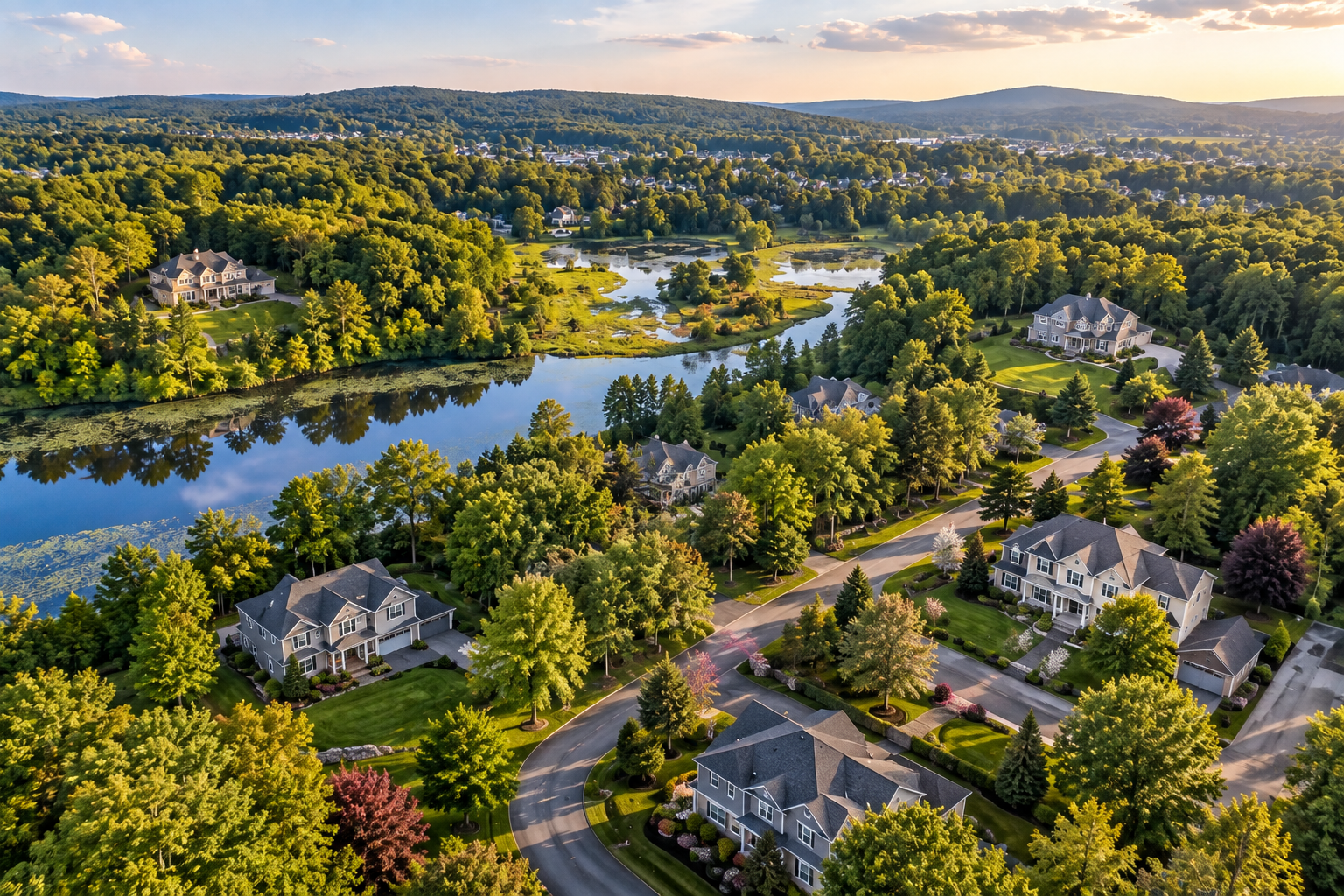
Not every luxury buyer wants walkability. Some of you are looking for acreage, mature trees, privacy, and the ability to step outside without seeing a neighbor. If that sounds like you, the Shaker Lane corridor and West Littleton deserve your attention.
This part of town represents Littleton's more rural, spacious character. Across Littleton, median sale prices have ranged from the high $700Ks to low $800Ks, with some individual months, like March 2026, showing a median near $1.2M, driven by larger-lot homes in exactly these kinds of pockets. Homes here sell in 36 to 47 days, which gives you more time to make a thoughtful decision compared to the faster-moving Littleton Common market.
Rated 5 out of 5 stars by 200 past clients, we have built our reputation on helping buyers understand not only what they are purchasing but the community they are becoming part of. In West Littleton, that community is defined by space, natural beauty, and a deep connection to the land. Places like Nagog Hill Orchard and Long Lake Park, which offers hiking, fishing, and kayaking, are part of daily life here, not just weekend destinations.
The key insight for luxury buyers? Different areas within Littleton attract different types of buyers, and factors such as lot size, property condition, updates, and proximity to local amenities all influence how a home performs in the market. Understanding that before you make an offer is the difference between buying well and just buying.
The Financial Case for Location-First Thinking in Littleton
Let us talk numbers, because location does not just affect your lifestyle. It affects your investment.
The median Littleton home is priced at approximately $825K, about $361 per square foot. With 20% down, the estimated monthly mortgage payment is around $4,281, plus roughly $1,022 per month in property taxes.
Littleton's FY2025 residential property tax rate is $14.86 per $1,000 of assessed value, which is moderate for a top-performing suburban school district in the Boston metro.
The average household income in Littleton Common is $147,000, and typical rent in the area runs around $2,912 per month, keeping the rent-versus-buy math competitive for buyers who are financially ready.
But here is where location makes the financial difference clear: the 6.2% year-over-year appreciation in Littleton Common means a home purchased there at $810K a year ago has gained roughly $47K in equity. That is not a guaranteed rate going forward, but it demonstrates that neighborhood-level demand can significantly outpace broader market trends.
As a team recognized in the Top 4% of Coldwell Banker Agents Worldwide and as Platinum Producers with the Northeast Association of Realtors, we bring the kind of granular, location-specific market knowledge that helps you identify which features actually command a premium in a particular Littleton neighborhood, and whether a property's asking price is supported by the local market.

Frequently Asked Questions About Buying in Littleton, MA
What is the median home price in Littleton in 2026?
The median Littleton home is priced at approximately $825K, about $361 per square foot. In the Littleton Common area specifically, the median sale price over the three months ending May 2026 was $810K, reflecting a 6.2% year-over-year increase. Prices vary significantly by neighborhood and lot size.
How competitive is the Littleton Common housing market?
Very competitive. The market scores 84 out of 100 on competitiveness metrics. Many homes receive multiple offers, some with waived contingencies. The average home sells for about 1% above list price, going pending in around 20 days. Hot homes can sell for about 6% above list price in as little as 13 days.
How are the schools in Littleton, MA?
Littleton Public Schools earns an A Overall Grade and is ranked #36 in Best School Districts in Massachusetts. The district jumped 20 slots in statewide rankings this year and now performs better than 88.2% of all Massachusetts districts. Littleton High School is ranked #47 statewide by U.S. News.
How long is the commute from Littleton to Boston?
The MBTA Commuter Rail station provides direct service to Boston's North Station in about an hour. Littleton sits at the junction of Routes 2 and 495, and the highway ramp puts you into Waltham or Burlington in roughly 25 to 35 minutes depending on traffic conditions.
What is the property tax rate in Littleton?
Littleton's FY2025 residential property tax rate is $14.86 per $1,000 of assessed value. For a median-priced home, that translates to roughly $1,022 per month in property taxes. This is considered moderate for a top-performing suburban school district in the Boston metro area.
Why do some Littleton neighborhoods appreciate faster than others?
Neighborhoods with walkability to town center amenities, proximity to commuter rail, strong school proximity, and limited housing supply tend to appreciate faster. Littleton Common's 6.2% year-over-year gain compared to more stable pricing in other pockets illustrates how demand concentrates around specific lifestyle factors.
What makes West Littleton different from Littleton Common for buyers?
West Littleton and the Shaker Lane corridor offer more rural character with larger lots, more privacy, and a premium for elbow room. Homes here sell in 36 to 47 days versus around 20 days in Littleton Common. Some months, like March 2026, showed a median near $1.2M in these pockets, driven by larger-lot properties.
Is Littleton a good town for outdoor recreation?
Yes. Residents enjoy Long Lake Park for hiking, fishing, and kayaking. Bumblebee Park at 32 King Street offers playgrounds, open spaces, and walking paths. Nagog Hill Orchard preserves the town's farming heritage, and open spaces throughout town are part of what draws buyers looking for nature access.
What percentage of Littleton Common residents are homeowners?
A strong 81% of residents in the Littleton Common area own their homes. This high ownership rate indicates a neighborhood of long-term stakeholders who invest in and care for their properties, which contributes to property value stability and neighborhood pride.
How do we know which Littleton neighborhood is right for our family?
The right neighborhood depends on your priorities: walkability versus privacy, commute time versus lot size, town center energy versus rural quiet. With over 550 closed transactions and 28 years of local experience, we help buyers evaluate these trade-offs using real market data and firsthand knowledge of how each pocket of Littleton performs.
The Bottom Line on Buying in Littleton
When you buy in Littleton, you are not just buying a house. You are choosing a daily routine, a commute, a school system, a community, and a long-term investment. The house itself matters, of course, but the location within Littleton will shape your experience and your equity for years to come.
We are proud to serve Littleton and help our clients make confident moves in a community we know and genuinely love. Whether you are drawn to the walkable energy of Littleton Common or the spacious privacy of the Shaker Lane corridor, we are here to help you understand exactly what you are buying, and why it matters. Learn more about downsizing in Littleton or explore first-time buyer costs for your first home.
Reach out to us, Tricia Eggert and Leah Paglia, at the Reliable Results Team. Call us at 978-496-8695 to start a conversation about finding the right location in Littleton for your next chapter.