What Buyers Will and Won't Compromise on in Littleton, MA
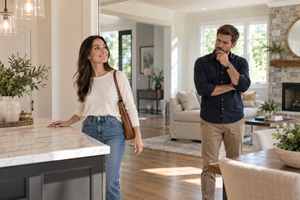
What are today's buyers in Littleton, MA willing to compromise on, and where do they draw the line?
Littleton buyers will flex on cosmetic updates, exact square footage, and home age, but they will not budge on neighborhood quality, lot size, school access, or the small-town lifestyle that makes this community unlike anywhere else in the Metrowest region.
Why This Matters Right Now in Littleton
If you are shopping for a home in Littleton in 2026, you are entering one of the most competitive micro-markets in Massachusetts. The median home is priced around $825K, or about $361 per square foot. In the Littleton Common area alone, the median sale price over the last 12 months hit $742,000, up 18% from the previous 12 months. Many homes get multiple offers, some with waived contingencies, and the average home sells for about 1% above list price while going pending in around 20 days.
So what does that mean for you? It means you need crystal-clear priorities. With tight supply and steady demand across every pocket of town, from Baldwin Hill to Shaker Lane, understanding what you can afford to compromise on (and what you absolutely should not) is the difference between finding a home you love and chasing listings for months. After 28 years in this market and over 550 closed transactions, we have seen these patterns repeat cycle after cycle. Let us walk you through what we are seeing on the ground right now.
What Littleton Buyers Refuse to Compromise on
Neighborhood Character and Community Feel
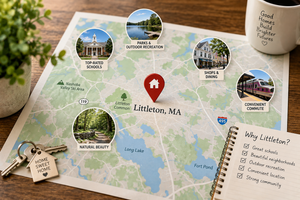
This is the single most consistent non-negotiable we encounter. Buyers who choose Littleton are choosing a lifestyle, not just a house. Whether you are drawn to the walkable energy of Littleton Common, with its town green, Forge Pub and Grille steps away, and summer kayaking at Long Lake, or you prefer the tree-lined, family-rooted streets of Baldwin Hill near Shaker Lane Elementary and Littleton High School, you are buying into a community that feels distinctly New England without being a museum piece.
We have watched buyers walk away from objectively "better" houses in nearby towns because the neighborhood feel simply did not compare. Littleton Common, for example, has a crime score of 1, making it safer than the average U.S. neighborhood, and 81% of residents own their homes. Those numbers reflect something buyers sense the moment they drive down King Street on a Saturday morning: people stay here for decades, and they stay on purpose.
Lot Size and Privacy
In the Baldwin Hill and King Street corridor, lot size is one of the three biggest price drivers alongside updates and proximity to the school campus. A well-maintained colonial on a half-acre lot near Shaker Lane Elementary will move significantly faster than an equivalent home further from town. In West Littleton along Shaker Lane and Newfield Road, buyers seeking larger parcels with significant tree coverage are willing to pay well over $1M for custom builds on multi-acre lots.
You will find that most buyers in our market would rather scale back on interior square footage than accept a cramped lot. Space around the house matters as much as space inside it.
School Quality and Campus Proximity
Families relocating to Littleton consistently rank school access as their top non-negotiable. Baldwin Hill is one of the best neighborhoods in Littleton for families, thanks to its close proximity to Littleton High School and Shaker Lane Elementary. Properties closest to this school campus corridor sell faster and command premium pricing. In our experience working with families moving from nearby communities like Westford, Acton, and Chelmsford, school boundary details are often the deciding factor before a single showing is booked.
Access to Nature and Open Space
Littleton's open spaces, conservation land off Russell Street, and the pastoral feel of West Littleton are non-negotiable draws. Buyers who want proximity to trails, recreation, and genuinely green surroundings will not settle for a subdivision that lacks them, regardless of how updated the kitchen is.
Where Littleton Buyers Are Willing to Flex
Here is where things get interesting, and where smart buyers gain a real advantage.
Cosmetic Updates and Interior Finishes
Dated kitchens, older bathrooms, original hardwood that needs refinishing: these are areas where buyers in Littleton routinely show flexibility. Why? Because in a market where the typical home value across Littleton is $716,457, and desirable areas like Littleton Common are trending toward $810K, many buyers recognize that a home in the right neighborhood with "good bones" is a smarter long-term investment than a fully renovated home in a less desirable location.
With 200 five-star reviews from past clients, one consistent piece of feedback we hear is that understanding what truly drives value in a home helps buyers see past surface-level finishes. Paint and countertops change. Your street address does not.
Exact Square Footage
You might assume buyers at the $800K-plus price point insist on a specific minimum square footage. In practice, we see the opposite. Buyers will accept a slightly smaller footprint if the lot is generous, the layout flows well, and the neighborhood checks every other box. In the King Street corridor, homes in the high $700Ks to low $800Ks move steadily with 13 to 16 active listings at a time. Buyers are competing for location, not an extra 200 square feet.
Home Age and Architectural Style
Littleton's housing stock spans colonial-era homes near the Common to newer construction in West Littleton. Many buyers arrive expecting to want new construction but discover that the mature landscaping, established neighborhood feel, and character of an older home near King Street and Shattuck Street offer something a new build simply cannot replicate. This is a compromise that often ends up feeling like an upgrade.
Commute Convenience (Within Reason)
Easy access to major routes, including I-495 via the King Street corridor, keeps Littleton connected. But buyers in our market understand that a 10-minute longer commute is worth the tradeoff for Littleton's quality of life. The King Street corridor runs from downtown all the way to I-495, giving you everything from older houses and ranch homes to newer construction on bigger lots, all with practical highway access.
How Littleton's Neighborhoods Shape Your Compromise Decisions
Understanding where to compromise starts with understanding which neighborhood aligns with your priorities.
Littleton Common: Most competitive. Scoring 84 out of 100 on competitiveness. Hot homes can sell for about 6% above list price and go pending in around 13 days. You will likely compromise on price or condition here, not on location.
Baldwin Hill / King Street Corridor: Homes often sell in 36 to 47 days. Slightly more breathing room for negotiation. Families prioritizing school proximity will hold firm on location but may flex on cosmetic condition.
Shaker Lane / West Littleton: The widest price range, from high-$600Ks for older ranches to well over $1M for custom builds. Privacy seekers rarely compromise on lot size here but may accept a longer drive to town amenities.
As recognized Top 4% Coldwell Banker agents worldwide and Platinum Producers with the Northeast Association of Realtors, we can tell you that this neighborhood-level understanding is what separates a confident purchase from a regretted one.
The Strategy Smart Buyers Use in Littleton
The most successful buyers we work with start by ranking their priorities into three tiers before they ever see a listing:
Tier 1 (Non-Negotiable): Neighborhood, lot characteristics, school access, community feel
Tier 2 (Strongly Preferred): Updated systems (roof, HVAC, windows), layout, garage
Tier 3 (Flexible): Paint colors, landscaping details, cosmetic finishes, exact room count
This framework keeps your search focused and prevents you from rejecting a property that checks every Tier 1 box because of a Tier 3 shortcoming. In a market where average homes go pending in around 20 days, decision clarity is a competitive advantage.

Frequently Asked Questions
What is the most common non-negotiable for Littleton buyers in 2026?
Neighborhood quality and community feel consistently rank first. Buyers choosing Littleton are selecting a lifestyle anchored by small-town charm, safety, and access to open space. They will adjust expectations on nearly everything else before settling for a neighborhood that does not feel right.
Are buyers in Littleton Common willing to pay above asking price?
Yes. The Littleton Common housing market scores 84 out of 100 for competitiveness. Average homes sell for about 1% above list price, and hot homes can sell for about 6% above list price while going pending in around 13 days.
Do buyers compromise on school district in Littleton?
Rarely. Proximity to Shaker Lane Elementary and Littleton High School in the Baldwin Hill corridor is a consistent priority for families. School access is one of the three biggest price drivers in that area alongside lot size and updates.
How much does lot size matter to Littleton buyers?
Significantly. Especially in Baldwin Hill and West Littleton, buyers prioritize generous lot size and privacy over interior square footage. A half-acre lot near the school campus can accelerate a sale dramatically compared to a smaller parcel.
Will buyers accept a home that needs cosmetic updating?
Many will. Dated finishes are one of the most common areas of flexibility, particularly when the home is in a desirable neighborhood like Littleton Common or Baldwin Hill. Buyers understand that renovations are temporary while location is permanent.
What is the median home price in Littleton, MA right now?
As of 2026, the median home in Littleton is priced around $825K, or about $361 per square foot. In Littleton Common specifically, the median sale price over the last 12 months is $742,000, up 18% from the prior year.
How long do homes typically stay on the market in Littleton?
It varies by neighborhood. In Littleton Common, hot homes go pending in around 13 days while average homes take about 20 days. In the Baldwin Hill and King Street corridor, homes often sell in 36 to 47 days.
Is proximity to I-495 a priority for Littleton buyers?
It is valued but not a dealbreaker. The King Street corridor provides direct access to I-495, and most buyers appreciate the convenience. However, they will accept a slightly longer commute in exchange for Littleton's overall quality of life.
Do Littleton buyers prefer new construction or older homes?
Buyers often arrive expecting to want new construction but frequently choose older, well-maintained homes for their character, established landscaping, and proven neighborhood feel. This is especially true near Littleton Common and along King Street.
How important is access to nature for Littleton buyers?
Very. Open spaces, conservation land, and the pastoral feel of areas like Shaker Lane and West Littleton are major draws. Buyers who prioritize outdoor access rarely compromise on it, regardless of other home features.
The Bottom Line
Buying in Littleton in 2026 means making deliberate choices. The buyers who succeed here, whether near the town green on King Street or on a wooded parcel off Shaker Lane, are the ones who know exactly which compromises make sense and which ones they will never make. Neighborhood, lot size, schools, and community are where lines get drawn. Cosmetic finishes, exact square footage, and home age are where smart flexibility creates opportunity.
With 28 years of local experience, over 550 closed transactions, and deep roots in Littleton and the surrounding communities of Westford, Acton, and Chelmsford, we would love to help you evaluate your first-time home purchase options and find the right home. Reach out to us at 978-496-8695 to start the conversation. We know this town, and we genuinely love helping buyers become part of it.
Tricia Eggert and Leah Paglia Reliable Results Team