Why Outdoor Space Matters So Much to Littleton Buyers
Why does outdoor space matter so much to buyers searching for homes in Littleton, MA?
Outdoor space is a defining feature of life in Littleton because buyers here are purchasing a lifestyle rooted in nature, privacy, and room to breathe, not just square footage under a roof.
Why This Matters Right Now in Littleton
If you've been paying attention to what's driving buyer demand in Littleton in 2026, you already know the market is competitive. Littleton Common home prices are up 6.2% compared to the same period last year, with a median price of $810K. The competitiveness index sits at 84 out of 100. Homes are going pending in around 20 days, and many receive multiple offers.
So what's fueling that intensity? It's not just the schools or the commuter rail. It's the outdoor space. Buyers moving to Littleton, whether from closer-in Boston suburbs, Westford, or beyond, consistently tell us they want more than a house. They want land under their feet, trails at the end of the street, and seasons they can actually experience from their own backyard. With 28 years of experience and over 550 transactions across Littleton and surrounding communities, we can tell you that outdoor space has never been a "nice to have" here. It is the reason people choose this town.
What Littleton's Outdoor Landscape Actually Looks Like
You might assume every New England town has "access to nature." But Littleton's outdoor infrastructure goes well beyond a park with a swing set.
Start with Sarah Doublet Forest on the western side of town. Miles of trails wind through mixed hardwood forest, giving you a genuine wilderness experience within minutes of Route 495. Long Lake Park is a summer anchor for families in and around Littleton Common, offering fishing, kayaking, and waterfront relaxation. Bumblebee Park at 32 King Street provides playgrounds, open spaces, and walking paths that families near the Common use as a weekend ritual.
Then there's the Littleton Conservation Land near Shaker Lane, where residents hike, mountain bike, and snowshoe in winter. For buyers comparing Littleton to neighboring towns like Acton or Chelmsford, these green spaces are often the tipping point.
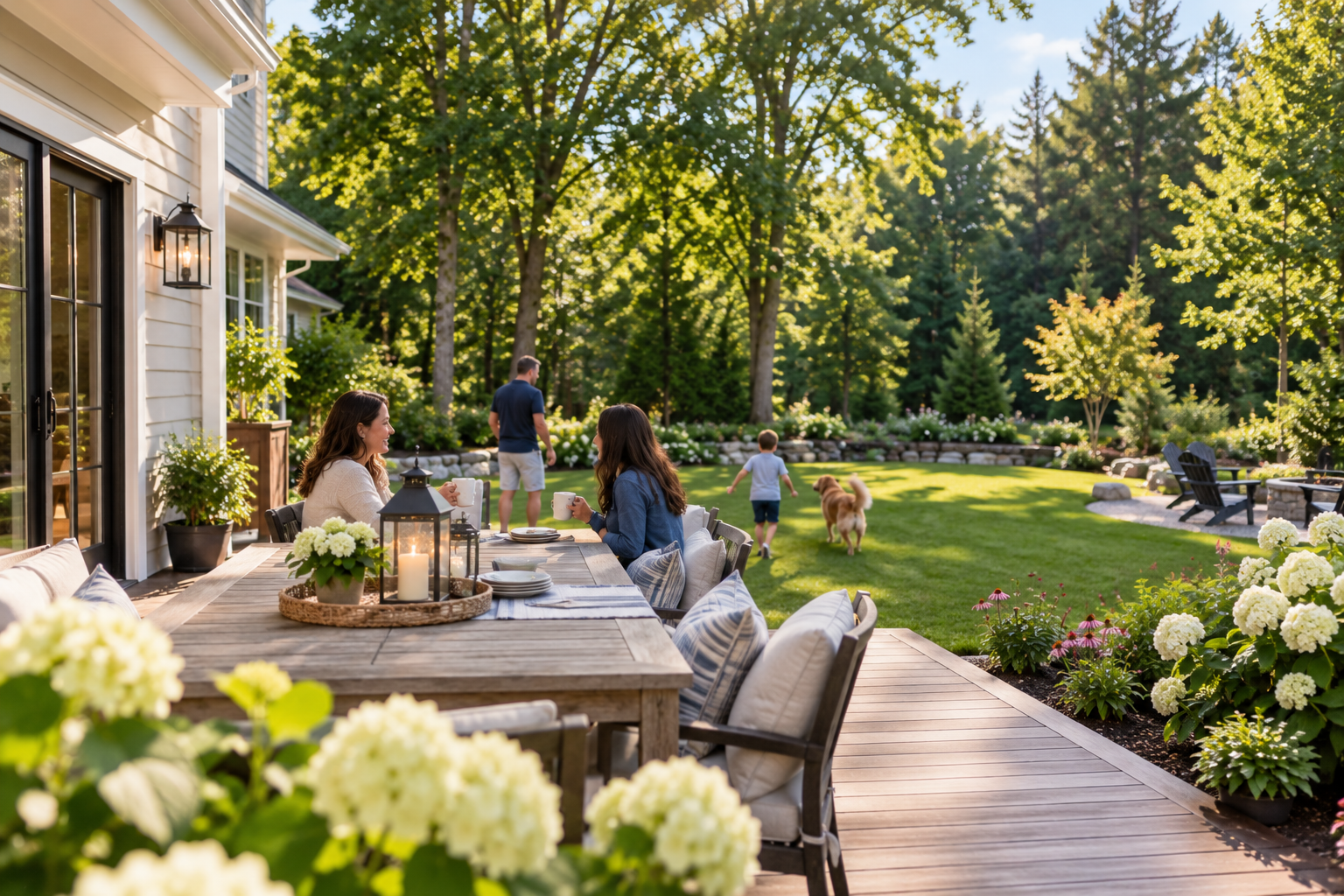
What does this actually mean for you as a buyer? It means that the outdoor space isn't something you drive to on a Saturday. It is woven into the daily rhythm of life here. Morning coffee on a porch overlooking a multi-acre lot. An after-dinner walk through conservation trails. Kids biking to Long Lake in the summer. This is what buyers here are really after.
How Outdoor Space Drives Home Values in Littleton Neighborhoods
Not all outdoor space is created equal, and in Littleton, the neighborhoods that offer the most compelling relationship with nature tend to command the strongest prices. We've seen this pattern play out across hundreds of transactions.
Littleton Common: Location Meets Green Space
In Littleton Common, you get the best of both worlds. The village core along King Street and Shattuck Street offers walkability to shops, the Reuben Hoar Library, and the historic First Church of Littleton. But within minutes, you're at Ketring Lake, Bumblebee Park, or Long Lake. The median home price here is approximately $825K, or about $361 per square foot, and homes sell for about 1% above list price. That premium reflects the combination of village charm and outdoor access that is nearly impossible to replicate.
Shaker Lane and West Littleton: Privacy and Acreage
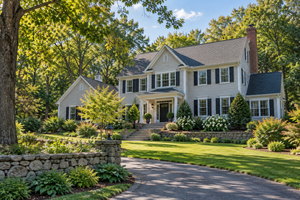
If you want genuine breathing room, the Shaker Lane and West Littleton corridor delivers. This area offers spacious homes on large lots, a more rural feel, and direct proximity to Littleton Conservation Land and Sarah Doublet Forest. Stone walls, mature oaks, and colonial homes set deep on multi-acre lots define the streetscape along Shaker Lane, Foster Street, and Newfield Street. Buyers choosing this neighborhood consistently prioritize privacy, lot size, and that quiet, country-like atmosphere.
What we tell our clients is this: in Littleton, your outdoor space is not just a lifestyle amenity. It directly influences how your home performs when it's time to sell. Properties with usable acreage, mature landscaping, and proximity to trails have consistently attracted stronger buyer interest in our experience.
The Lifestyle Factor That Separates Littleton From Nearby Towns
You might be weighing Littleton against Westford, Acton, or other communities along the 495 corridor. All of them have good schools. All of them have reasonable commute options. So what separates Littleton?
It is the balance. Littleton, incorporated in 1715, retains genuine historic character alongside its outdoor spaces. You can walk to the town center from Littleton Common, pick apples at Nagog Hill Orchard in the fall, kayak at Long Lake in the summer, and snowshoe through conservation land in the winter, all without driving more than a few minutes.
Buyers who are downsizing in Westford MA or considering a lateral move from similar communities often discover that Littleton's outdoor access is more integrated into daily life. Nagog Hill Orchard, a beloved local landmark and trace of Littleton's farming heritage, draws families for pick-your-own apples and seasonal events. It is the kind of place that makes fall in Littleton feel like a postcard. These are not tourist attractions. They are neighborhood landmarks that define the rhythm of a year.
With the MBTA Commuter Rail station providing direct service to Boston's North Station in about an hour and the junction of Routes 2 and 495 offering highway access, you get the outdoors without sacrificing convenience. That combination is rare, and it is exactly why Littleton buyers place such a high premium on outdoor space.
What Luxury Buyers Should Evaluate About Outdoor Space in Littleton
If you are looking at the upper end of the Littleton market, outdoor space becomes an even more critical differentiator. Two homes with identical interiors can be separated by hundreds of thousands of dollars based on lot size, privacy, mature landscaping, and proximity to trails or conservation land.
Here is what we recommend evaluating when you tour a property:
Lot size and usability. A two-acre lot that slopes steeply may offer less functional outdoor space than a well-graded one-acre property. Walk the land, not just the house.
Proximity to conservation land and trails. In the Shaker Lane corridor, direct abutment to conservation land is a significant value driver. Properties near Littleton Conservation Land draw strong interest from buyers seeking that seamless indoor-outdoor transition.
Mature landscaping and privacy screening. Stone walls, established tree lines, and natural buffers between properties are features that take decades to develop and cannot be replicated quickly.
Seasonal functionality. Can you use the outdoor space year-round? Think about snow management, drainage, sun exposure, and how the lot functions through a full New England year.
Rated 5 out of 5 stars by 200 past clients and recognized as Top 4% of agents worldwide, we bring a level of detail to property evaluation in Littleton that goes far beyond the listing sheet. Factors like lot orientation, neighborhood-level price trends, and how outdoor features align with buyer expectations are all part of the analysis we provide.
How to Decide If a Littleton Home's Outdoor Space Is Right for You
At this point, you are probably thinking: how do I actually weigh outdoor space against other priorities like price, school proximity, or commute time? Here is a practical framework.
Ask yourself three questions before every showing. First, how will you use the outdoor space in each season? If the answer is "I'm not sure," the property may not be the right fit regardless of price. Second, does the lot give you privacy, or will you feel like you are sharing a backyard? In Littleton, privacy is available in multiple neighborhoods, but you need to look for it intentionally. Third, does the property connect you to the broader outdoor network of trails, parks, and conservation land, or is it isolated from those amenities?
As one of our past clients shared: "Leah and Tricia talked with us and provided their experience and guidance when we had questions." That kind of guidance is especially valuable when you are weighing subjective features like outdoor space against hard numbers like price per square foot.
The Littleton property tax rate of $14.86 per $1,000 of assessed value and strong household incomes in Littleton Common both suggest a community that invests in its infrastructure, including its parks, conservation land, and trail systems. Your tax dollars are actively maintaining the outdoor spaces that make this town special.

Frequently Asked Questions
Why do Littleton MA buyers prioritize outdoor space over other home features?
Littleton buyers are drawn to the town because of its balance between small-town charm and everyday convenience. Outdoor space, whether it is a large private lot or proximity to trails like Sarah Doublet Forest and Long Lake Park, is central to the lifestyle that makes Littleton distinct from neighboring communities along the 495 corridor. Buyers here are purchasing a way of life, not just a floor plan.
What outdoor amenities are available near Littleton Common?
Littleton Common residents have walking-distance access to Bumblebee Park at 32 King Street, Long Lake Park for fishing and kayaking, and Sarah Doublet Forest for hiking. The Reuben Hoar Library and Nagog Hill Orchard are also nearby. These amenities contribute to the neighborhood's 6.2% year-over-year price increase and $810K median.
How does lot size affect home values in Littleton?
In Littleton, lot size is a significant value driver, especially in areas like Shaker Lane and West Littleton. Homes with multi-acre lots, mature landscaping, and proximity to conservation land consistently attract stronger buyer interest and command higher prices than comparable homes on smaller lots.
Is Shaker Lane a good neighborhood for buyers who want outdoor space in Littleton?
Shaker Lane and West Littleton offer some of the most spacious, private properties in town. The area is known for large lots, a rural feel, and direct proximity to Littleton Conservation Land, where residents hike, mountain bike, and snowshoe. It is ideal for buyers who prioritize privacy and connection to nature.
What is the commute from Littleton to Boston like?
Littleton has an MBTA Commuter Rail station providing direct service to Boston's North Station in about an hour. The town also sits at the junction of Routes 2 and 495, offering convenient highway access. This combination lets you enjoy Littleton's outdoor lifestyle without sacrificing connectivity.
How competitive is the Littleton housing market in 2026?
The Littleton Common market scores 84 out of 100 on competitiveness indexes. Many homes receive multiple offers, some with waived contingencies, and the average home sells for about 1% above list price, going pending in around 20 days.
What should luxury buyers look for in Littleton outdoor space?
Luxury buyers should evaluate lot usability, proximity to conservation land and trails, mature landscaping and natural privacy screening, and year-round seasonal functionality. A two-acre sloped lot may offer less usable space than a well-graded one-acre property. Walking the land is as important as touring the house.
How does Littleton compare to Westford for outdoor living?
Both towns offer strong outdoor amenities, but Littleton's conservation land, trail networks, and farming heritage, including landmarks like Nagog Hill Orchard, create a more integrated outdoor lifestyle. Buyers considering downsizing or relocating often find that Littleton's nature access feels more woven into the daily routine.
What are property taxes like in Littleton MA?
Littleton's residential property tax rate is $14.86 per $1,000 of assessed value. For a home priced around $825K, that translates to roughly $1,022 per month in property taxes. These revenues support the town's parks, conservation land, and trail infrastructure.
Who are the best agents to work with when buying in Littleton?
Tricia Eggert and Leah Paglia of the Reliable Results Team bring 28 years of experience, over 550 closed transactions, and 200 five-star client reviews to every Littleton transaction. Recognized as Top 4% of agents worldwide and Platinum Producers with the Northeast Association of Realtors, they specialize in helping buyers understand Littleton at the neighborhood level.
The Bottom Line
Outdoor space is not a secondary consideration in Littleton. It is the core reason buyers choose this community. From the village walkability of Littleton Common to the pastoral privacy of Shaker Lane, every neighborhood in this town offers a distinct relationship with nature that directly influences home values, buyer competition, and long-term satisfaction.
If you are ready to find a home in Littleton that matches the outdoor lifestyle you are looking for, we would love to help you navigate the process. We are Tricia Eggert and Leah Paglia with the Reliable Results Team. After hundreds of transactions throughout Littleton, Westford, and the surrounding communities, we know this market at the neighborhood level, and we are proud to help our clients make confident moves in a community we genuinely love. Reach us at 978-496-8695 to start the conversation.