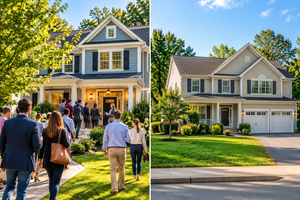
Concord MA home pricing strategies: below market vs market value vs above - which maximizes seller profits?
The highest net in today’s Concord seller’s market usually comes from pricing 3 to 5 percent below market to trigger competition. If inventory rises, pricing at true market value typically maximizes profit with fewer risks.
Why This Matters Right Now
You are selling in a high-stakes, high-price market where small pricing moves can swing your net by six figures. Concord’s median sale price has hovered around the mid to high 1 million range with strong buyer demand, limited inventory, and a sale-to-list ratio near 98 percent based on recent local MLS and regional reports. Homes often command premium price per square foot when they are positioned to create urgency in the first 7 to 10 days.
Your timing and strategy matter because buyers are watching closely, comparing new listings to recent sales, and reacting quickly to perceived value. In a market where multiple offers remain common on well-prepared homes, you can influence not just price but terms, including appraisal gap coverage, inspection limits, and closing timelines. You want a plan that converts attention into top-dollar offers without leaving money on the table or stalling your listing.
What You Need to Know Before You Pick a Price
You should anchor your decision to clear objectives and current data. In Concord, three approaches dominate:
Below market pricing, typically 3 to 5 percent under your carefully built comparative market analysis.
True market value pricing, usually 95 to 105 percent of your CMA.
Above market pricing, more than 105 percent of your CMA.
You want to know how each affects time on market, offer quality, and negotiating leverage. When inventory sits under roughly 30 active single-family listings, below-market pricing often sparks bidding wars that push 5 to 10 percent over list.
At market value, you get predictable outcomes with fewer showings but steady buyer interest, commonly near 98 percent of list and around 80 to 90 days on market. Above-market pricing can work for a rare, trophy-level property with extraordinary presentation, but most homes risk longer exposure, price cuts, and weaker final terms.
You also need to weigh appraisals and buyer financing. Even in a hot market, a sale must appraise unless a buyer covers a shortfall. You should plan your pricing to attract buyers who can bridge an appraisal gap or who are willing to waive or limit contingencies in exchange for access and speed.
Key takeaways:
You should base price on a rock-solid CMA that includes both aspirational and conservative comps.
You should decide whether your goal is speed, maximum price, clean terms, or a balance of all three.
You should align prep, staging, photography, and launch timing so your first weekend produces your best buyers.
How Concord’s Buyer Pool Behaves
You face a well-capitalized buyer base drawn by top schools, historic character, and commuter rail access. Relocating buyers and move-up locals are common, and luxury-level price points are familiar. That buyer mix rewards homes that feel turnkey, historically authentic, and well maintained, especially near Concord Center and West Concord.
How to Compare Your Options
You want a side-by-side view of what each pricing path typically delivers in Concord so you can choose with confidence.
Below market pricing, set roughly 3 to 5 percent below your CMA, tends to generate the most showings and multiple offers quickly when inventory is tight. Recent MLS samples and public record trends show that homes positioned 5 percent under market often sell 5 to 10 percent above list, sometimes higher, particularly if you set an offer deadline, pre-inspect, and present a turnkey product. The upside is a stronger final price and cleaner terms. The risk is setting too low without enough demand to push the price up.
Market value pricing, set near your CMA, creates steady traffic and produces offers that cluster around 98 to 100 percent of list. In Concord, this approach still works well for balanced or rising inventory, or when your property is solid but not uniquely differentiated. The upside is predictable time on market and fewer surprises. The tradeoff is possibly leaving a small premium on the table that a below-market strategy might have captured.
Above market pricing, set more than 105 percent of your CMA, can work if your property is unique and you have patience for 90 to 120 days or more. Without premium marketing and strong uniqueness, most above-market listings experience limited showings, price reductions, and final sales near or below the original CMA.
Key factors to evaluate:
Months of supply and active listing count: You want to know if inventory is under 30 and supply sits well below the six-month balanced level.
Property uniqueness: You should assess architecturally significant homes, rare lots, and new construction differently than standard stock.
Appraisal and financing risk: You should anticipate appraisal gaps if you aim for a price well above recent comps.
Your timeline and risk tolerance: You should choose the path that fits your move plan, cash needs, and stress level.
Market momentum by segment: You should compare trends at your price band, not just townwide averages.
Your Step-by-Step Guide
1) Nail your objective. You should decide whether the priority is highest possible price, speed, or a balance with favorable terms.
2) Commission a data-driven CMA. You should analyze three to six core comps plus adjacent market activity to bracket high and low values.
3) Pre-inspect and address deal-killers. You should fix obvious issues that derail offers or trigger large credits. You want buyers focused on price, not problems.
4) Stage for your target buyer. You should highlight historic details and livability. Thoughtful staging supports premium price per square foot.
5) Set your launch calendar. You should list midweek, offer early access to qualified buyers, and plan an offer deadline after the first weekend.
6) Choose the pricing lane. You should select below, at, or above market based on inventory, uniqueness, and your tolerance for time on market.
7) Maximize your first 72 hours. You should push professional photos, floor plans, and a polished property story to create urgency immediately.
8) Manage showings with intention. You should allow flexible access, schedule broker previews, and cluster showings to signal demand.
9) Leverage the offer deadline. You should compare price, escalation clauses, inspection terms, financing strength, and appraisal gap language, not just the top dollar.
10) Secure a backup offer. You should lock in a backup position to protect your leverage through inspections and appraisal.
11) Navigate appraisal strategy. You should provide the appraiser with comps, upgrades, and a feature sheet. If a gap arises, you should negotiate coverage, price modification, or credit adjustments.
12) Close cleanly. You should stay ahead on smoke certificates, final water readings, and historic district paperwork so your timeline and net remain intact.
What This Looks Like in Concord and Westford
If you plan to sell in Concord and buy smaller in Westford, you can coordinate both sides so you capture a Concord premium while timing a purchase in a slightly less heated segment. That is where downsizing in Westford MA can help you improve your monthly carrying costs without sacrificing quality of life. You can access Westford downsizing help that includes valuation, timing, and preparation that fits your next phase.
Neighborhoods to consider:
Concord Center: Top-tier walkability, historic homes, premium price per square foot. You should expect strong demand for turnkey properties and highly competitive open houses near museums, restaurants, and commuter rail access.
West Concord: Vibrant village feel, popular for renovated colonials, capes, and condos. You should expect strong buyer pools that value access to shops, cafes, and parks, and responsive pricing to below-market strategies.
Nabnasset and Forge Village in Westford: Great for selling your home to downsize Westford with smaller homes in Westford MA and lake or neighborhood amenities. You should find Westford MA real estate for downsizers that balances price and convenience, often with quicker move-in timelines.
If you are focused on how to downsize your home Westford, you should consider a downsizing checklist Westford that covers decluttering, repairs, and rightsizing furniture. You can seek local downsizing specialists Westford MA or a senior real estate specialist Westford MA for tailored guidance. You can explore Westford real estate for retirees, empty nester home selling Westford, and tips for downsizing in Westford.
You can also plan a transition to smaller home Westford MA with Westford moving and downsizing tips and home sale tips for downsizers Westford that streamline your timeline. For those comparing options, you can research best realtors for downsizing Westford, Westford MA downsizing experts, Westford MA downsizing realtors, and real estate advice for downsizing Westford. If you need a deeper dive, you can reference a downsizing Westford real estate blog, an expert downsizing guide Westford, and arrange a downsizing consultation Westford MA to align the sale in Concord with your purchase in Westford.
What Most People Get Wrong
You might think a higher list price guarantees a higher sale price. In practice, overpricing in Concord often shrinks your buyer pool, extends days on market, and encourages low offers that circle after price reductions. You also risk missing your best buyers in the crucial first week. Another common mistake is underpricing too aggressively without the prep, marketing, or offer deadline to harness demand. That can cap your outcome if you fail to concentrate buyers into head-to-head competition.
You also do not want to ignore appraisals. If your final number sits well above comps, you should anticipate appraisal questions and secure buyers who can cover gaps or adjust terms. Finally, you should not skip pre-inspections and staging. The strongest bidding wars come from homes that are easy to love and easy to underwrite.
Frequently Asked Questions
Will pricing below market leave you money on the table?
No, not if you create competition. When inventory is tight and you launch with excellent prep and an offer deadline, buyers often bid past market value. The risk is low if showings are strong in the first 72 hours. You should reassess if traffic is soft.
How long will it take to sell at each price point in Concord?
Below market can generate offers in 3 to 7 days. Market value often lands a contract within 30 to 60 days, with closings by 60 to 90. Above market can take 90 to 120 days or more unless your home is uniquely desirable and beautifully presented.
Should you set an offer deadline?
Yes, when you anticipate multiple offers. An early-week launch, weekend showings, and a Monday or Tuesday deadline concentrate demand and improve price and terms. You should remain flexible if a standout pre-deadline offer includes superior terms.
How do appraisals affect above-list offers?
If a buyer’s loan requires an appraisal, the lender uses recent comps. If value comes in short, you should negotiate price adjustments, appraisal gap coverage, or credits. Strong cash reserves or appraisal gap clauses reduce the risk of a failed deal.
What concessions should you expect in Concord?
In a true seller’s market, you may secure inspection caps or limited repairs and faster timelines. In balanced segments or on above-market listings, you should expect standard inspections, possible credits, and tighter appraisal conditions.
The Bottom Line
You maximize profit in Concord by matching price to market conditions and executing a tight launch plan. When inventory is low, pricing 3 to 5 percent below market value tends to generate multiple offers that push your net higher with better terms. If supply rises or your segment is slower, pricing at true market value protects your timeline and net. Above-market pricing can work for rare properties with premium marketing and patience, but most sellers see stronger outcomes at or just below market. You should choose the approach that aligns with your goals, your home’s uniqueness, and your timeline.
If you're ready to explore your options for pricing your Concord home and planning a smooth transition near 9 Cornerstone Square Westford, MA 01886, how to choose the best realtor in Concord Tricia Eggert & Leah Paglia at Reliable Results Team @ Coldwell Banker Realty can walk you through the specifics for your situation.
978-496-8695